 Reviews

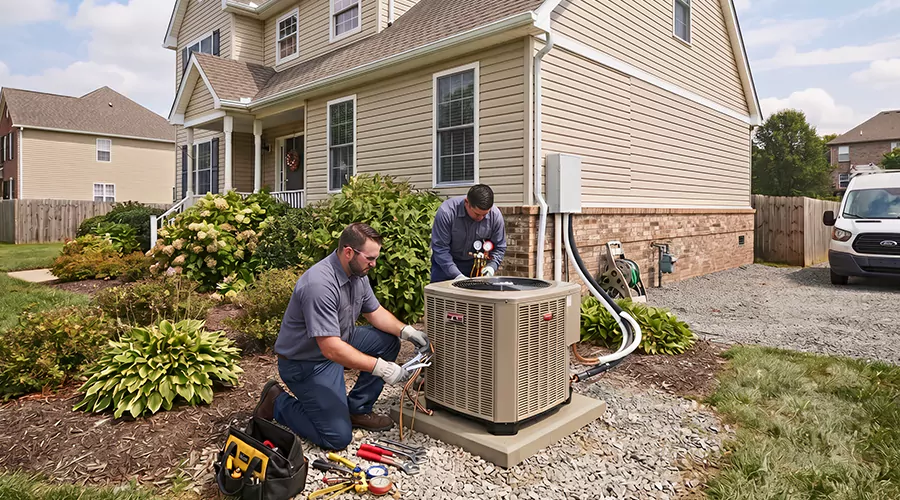
The cost to install central air typically ranges from $5,000 to $15,000 in 2026 when a home already has usable ductwork. A first-time installation that also needs new ducts can reach about $9,000 to $18,000 or more.
Equipment size has a major effect on the final price. Duct condition also matters. Electrical upgrades can add hundreds or thousands of dollars.
Adding central cooling is different from replacing an existing AC system. A first-time installation may require new ducts or new electrical service before the cooling equipment can even be connected.
What Is the Average Central AC Installation Cost in 2026?
A typical central ac installation cost ranges from about $5,000 to $15,000 in 2026 for a home with suitable ducts. First-time installations become more expensive when the project requires new ductwork. Larger homes also need higher-capacity equipment which raises both material and labor costs.
Installation Type Planning Table
| Installation type | Typical 2026 cost |
|---|---|
| Basic central AC installation | $5,000 to $8,000 |
| Typical mid-range installation | $8,000 to $12,000 |
| Higher-efficiency installation | $12,000 to $15,000+ |
| Central AC with new ductwork | $9,000 to $16,000 |
| Complex first-time installation | $12,000 to $18,000+ |
| Difficult older-home retrofit | $15,000 to $20,000+ |
The air conditioner installation cost changes significantly from one house to another. A 1,500-square-foot ranch can be relatively simple, while a large two-story home can require more cooling capacity. Older homes can create another challenge because there may be very little space available for conventional ducts. Wall repairs can also increase the total when new duct routes must pass through finished areas.
What Is the Cost to Install Central Air With Existing Ductwork?
The cost to install central air with existing ductwork generally falls between $5,000 and $15,000 in 2026 when the ducts are correctly sized and in good condition. Existing ducts can remove one of the largest expenses from a first-time central cooling project.
Existing ducts do not automatically mean the system is ready. The contractor should inspect their condition first. Old ducts can leak, flexible sections can become crushed, and existing trunks may also be too small for the required airflow.
Existing Ductwork Breakdown Table
| Item | Typical 2026 cost |
|---|---|
| Central AC equipment | $2,800 to $7,500 |
| Installation labor | $1,500 to $3,000 |
| Permit | $250 to $400 |
| Thermostat | $120 to $260 |
| Minor duct modifications | $300 to $1,500 |
| Electrical corrections | $300 to $1,500 |
A home with good existing ducts is usually the easiest situation. The installer can focus on the condenser and indoor coil. Electrical connections still need to be checked, and the condensate drain also needs proper installation.
What Is the Cost to Install Central Air With No Existing Ductwork?
The cost to install central air with no existing ductwork commonly reaches $9,000 to $18,000 in 2026. Complex older homes can exceed $20,000. New ducts often add about $3,000 to $7,500 because installers must build a complete distribution system through the house.
The ducts are not simply empty tubes. The system needs supply runs and adequate return airflow. Trunk lines must be sized correctly, and insulation is normally needed when ducts pass through unconditioned areas. The house must also have enough physical space for the duct system. This becomes a challenge in many older homes.
First-Time Project Table
| Project item | Typical cost |
|---|---|
| Central cooling equipment | $3,900 to $7,900 |
| Professional installation | $1,500 to $3,000 |
| New ductwork | $3,000 to $7,500 |
| Thermostat | $120 to $260 |
| Electrical changes | $300 to $1,500 |
| Permit | $250 to $400 |
| Finish repairs if needed | $500 to $3,000+ |
The total depends heavily on how the ducts can be routed. An open attic usually makes installation easier, while finished ceilings can make the work more expensive.
How Much Does Central Air Cost by Home Size?
Home size influences central AC pricing because larger houses generally need greater cooling capacity. A small home may use a 1.5-ton or 2-ton system. A large home can need 5 tons or more. Proper sizing requires more than square footage alone.
Home Size Planning Table
| Home size | Common equipment range | Typical installed cost |
|---|---|---|
| 1,000 sq. ft. | 1.5 to 2 tons | $4,500 to $7,000 |
| 1,200 sq. ft. | 2 to 2.5 tons | $5,000 to $7,500 |
| 1,500 sq. ft. | 2.5 to 3 tons | $6,000 to $8,500 |
| 1,800 sq. ft. | 3 to 4 tons | $6,500 to $10,000 |
| 2,000 sq. ft. | 3.5 to 4.5 tons | $7,000 to $11,500 |
| 2,500 sq. ft. | 4.5 to 5 tons | $8,500 to $13,500 |
| 3,000 sq. ft. | 5 tons or more | $10,000 to $16,000+ |
These numbers assume no major new duct installation. Do not select equipment only from this table. Two homes with the same square footage can have different cooling loads because window area matters, insulation quality also changes the load, ceiling height has an effect too, and local climate matters. Professional sizing should account for those conditions.
What Makes Central Air Installation More Expensive?
The biggest cost factors are system capacity and efficiency. Ductwork can create another major expense. Electrical changes can raise the total as well. Difficult equipment locations also increase labor. A properly itemized estimate should show which of these factors are affecting your project.
System Capacity
Larger equipment normally costs more. A 5-ton unit generally costs more than a 2-ton unit. Oversizing is not a good way to improve comfort because a system that is too large can cycle too quickly. That can reduce moisture removal.
Efficiency Level
Higher-efficiency equipment usually carries a higher purchase price. Single-stage systems tend to cost less, while two-stage equipment normally costs more. Variable-speed equipment can cost considerably more. The best choice depends on climate and expected usage.
Ductwork
Adding ducts can increase the project by $3,000 to $7,500. Major redesign work can go higher. The existing distribution system should be checked before new cooling equipment is selected.
Electrical Work
The outdoor condenser needs the proper electrical circuit. Older electrical panels can create additional work, and a new disconnect may also be required. Electrical upgrades can move the project several hundred dollars above the basic quote.
Installation Access
Equipment installed in an open basement is relatively accessible. Tight attics require more labor, while roof access can create another challenge. Difficult equipment placement should be identified before the installation date.
Why Is Proper AC Sizing Important?
Correct sizing matters because an oversized AC can cool too quickly while an undersized system can run almost continuously. Both conditions can create comfort problems. A professional load calculation considers more than floor area. It evaluates how much heat actually enters the home during design conditions.
The calculation can consider home size, insulation levels, window area, window direction, ceiling height, air leakage, local climate, number of occupants, and building orientation. A contractor should not simply replace a rule-of-thumb number with the next larger size. Larger is not automatically better.
An oversized unit may satisfy the thermostat quickly, but the cooling cycle can end before enough moisture is removed. That can leave the home cool but humid. An undersized system creates a different problem. It may struggle during the hottest afternoons. Correct capacity gives the system a better chance of maintaining comfort without excessive cycling.
How Does a First-Time Central Air Project Progress in Cost?
A first-time installation often starts with an affordable equipment estimate before additional work is identified. The price rises when existing ducts need repair or when the home has no ducts. Electrical changes can add another step. Complex structural work creates the highest project totals.
Project Progression Table
| Project stage | What is needed | Typical cost |
|---|---|---|
| Simple | Existing ducts are ready | $5,000 to $8,000 |
| Standard | Typical equipment and labor | $8,000 to $12,000 |
| Upgraded | Higher-efficiency equipment | $12,000 to $15,000+ |
| Added ductwork | New distribution system | $9,000 to $16,000 |
| Complex | Electrical and structural work | $12,000 to $18,000+ |
| Major retrofit | Older home with difficult routing | $15,000 to $20,000+ |
This is why the lowest equipment quote may not reflect the final project. The home itself creates much of the cost difference. A detailed inspection should happen before a final price is accepted.
10 Warning Signs Your Home May Need Extra Work Before Installation
A central air project can become more expensive when the existing house has airflow or electrical problems. Identifying them before installation reduces surprises. Poor duct condition is one warning sign. Limited electrical capacity is another. Persistent room-to-room temperature differences can also point toward distribution problems.
Warning Signs List
- Several rooms have very weak airflow.
- Existing ducts have visible tears.
- Flexible ducts are badly crushed.
- Duct insulation is falling apart.
- Some rooms have never heated evenly.
- The electrical panel has very little available capacity.
- Existing ducts are extremely small.
- Return-air openings appear limited.
- Major duct sections run through inaccessible finished areas.
- The home has no clear route for new supply ducts.
These conditions do not mean central air cannot be installed. They mean the estimate should address them. A new condenser cannot correct a badly designed duct system. Installing the cooling equipment first can leave the homeowner with an expensive system that still has poor comfort.
What Safe DIY Check Can You Do Before Getting Quotes?
You can perform a simple home survey before meeting an HVAC contractor. Record the size of the house and identify existing vents. Check which rooms have supply registers. Note where the furnace or air handler is located. This information helps reveal whether the project already has usable distribution infrastructure.
- Start at the thermostat.
- Identify whether the home already uses forced-air heating.
- Walk through each room.
- Count the supply registers.
- Look for return grilles.
- Check accessible ducts visually.
- Look for crushed flexible sections.
- Record rooms that are consistently warmer than others.
- Take photos of the indoor equipment label.
- Photograph the electrical panel from a safe distance.
Do not remove duct panels. Do not remove the electrical panel cover. Avoid entering unsafe attic areas.
This simple survey will not replace professional design. It can make your first estimate much more productive.
When Should You Call a Professional?
Professional evaluation should happen before purchasing equipment because central air must be sized and matched to the home. A contractor can calculate the cooling load and inspect the existing ducts. Electrical requirements can also be identified before work begins. These steps reduce expensive changes after installation starts.
A central air conditioner installation normally requires several professional tasks like installing the indoor coil correctly, handling refrigerant piping, providing a suitable electrical circuit for the outdoor condenser, and addressing condensate drainage and airflow problems.
- Ask whether the proposal includes a load calculation.
- Ask whether the ducts were inspected.
- Request exact equipment model numbers.
- Find out whether the permit is included.
- Ask which electrical changes are included.
- Ask whether thermostat installation is included.
A detailed quote is easier to compare than one total number.
Should You Install Central Air or Choose a Ductless System?
Central air often makes the most sense when a home already has usable forced-air ducts. Ductless systems become more attractive when no ducts exist and adding them would require major construction. The correct choice depends on home layout and the number of rooms that need cooling.
Central systems provide cooling through hidden ducts, which keeps most equipment out of individual rooms. A ductless system uses one or more indoor heads, avoiding the need to build a full distribution system.
The price difference becomes especially important in older homes. Installing $6,000 of new ducts just to support central cooling changes the financial comparison. A multi-zone ductless system can still become expensive. The homeowner should compare complete installed prices rather than only the outdoor equipment cost.
How Can You Keep Installation Costs Under Control?
Installation costs are easier to control when the project scope is defined before equipment is ordered. Have the ducts inspected first. Ask whether electrical changes are required. Compare equipment of similar size and efficiency. An itemized quote also makes hidden differences between contractors easier to identify.
- Request at least two detailed estimates.
- Make sure they describe similar equipment.
- Compare model numbers.
- Check whether permits are included.
- Review ductwork separately.
- Ask whether old equipment removal is included when applicable.
- Do not automatically select the largest unit.
- Avoid choosing a high-efficiency tier without comparing the added price.
- A more expensive system can make sense when it solves a real need.
- The lowest quote can also become expensive when important work has been excluded.
How Can You Protect a New Central Air System?
A new system should receive regular filter checks and seasonal inspection to protect airflow. The outdoor condenser also needs clear space around it. Drainage should remain clear during cooling season. These simple habits help identify developing problems before they turn into larger repairs.
- Check the filter regularly during heavy cooling use.
- Replace it when needed.
- Do not block return grilles.
- Keep furniture away from supply registers.
- Remove loose debris near the outdoor unit.
- Watch for water around the indoor equipment.
- Listen for new startup sounds.
Professional cooling maintenance commonly costs about $75 to $200 per visit. Compare that with a major compressor repair that can exceed $1,000. Maintenance does not prevent every failure. It helps preserve the conditions the new equipment was designed to operate under.
Conclusion
The cost to install central air generally runs $5,000 to $15,000 in 2026 when usable ducts already exist. Homes that need new ductwork can reach $9,000 to $18,000 or more. Equipment size and duct condition have the biggest impact on price. Before requesting estimates, identify existing vents and photograph your HVAC equipment so each contractor can evaluate the same project scope.
Frequently Asked Questions
Most projects cost about $5,000 to $15,000 when suitable ductwork already exists. Homes requiring a complete new duct system can cost $9,000 to $18,000 or more.
Usually yes. New residential ductwork can add roughly $3,000 to $7,500 to a project. Existing ducts should still be inspected for proper size and condition.
A straightforward project can often be completed within one or two days. Adding a complete duct system can extend the project to several days or longer.
Yes. The main challenge is often finding space for ducts. Older homes with limited wall or ceiling space may require alternative duct routing.
Many installation packages include a basic thermostat but not all do. A new control commonly adds about $120 to $260 when it is priced separately.
Not when existing ducts are correctly sized and in good condition. Homes without forced-air ducts normally require a new distribution system or a different cooling approach.